
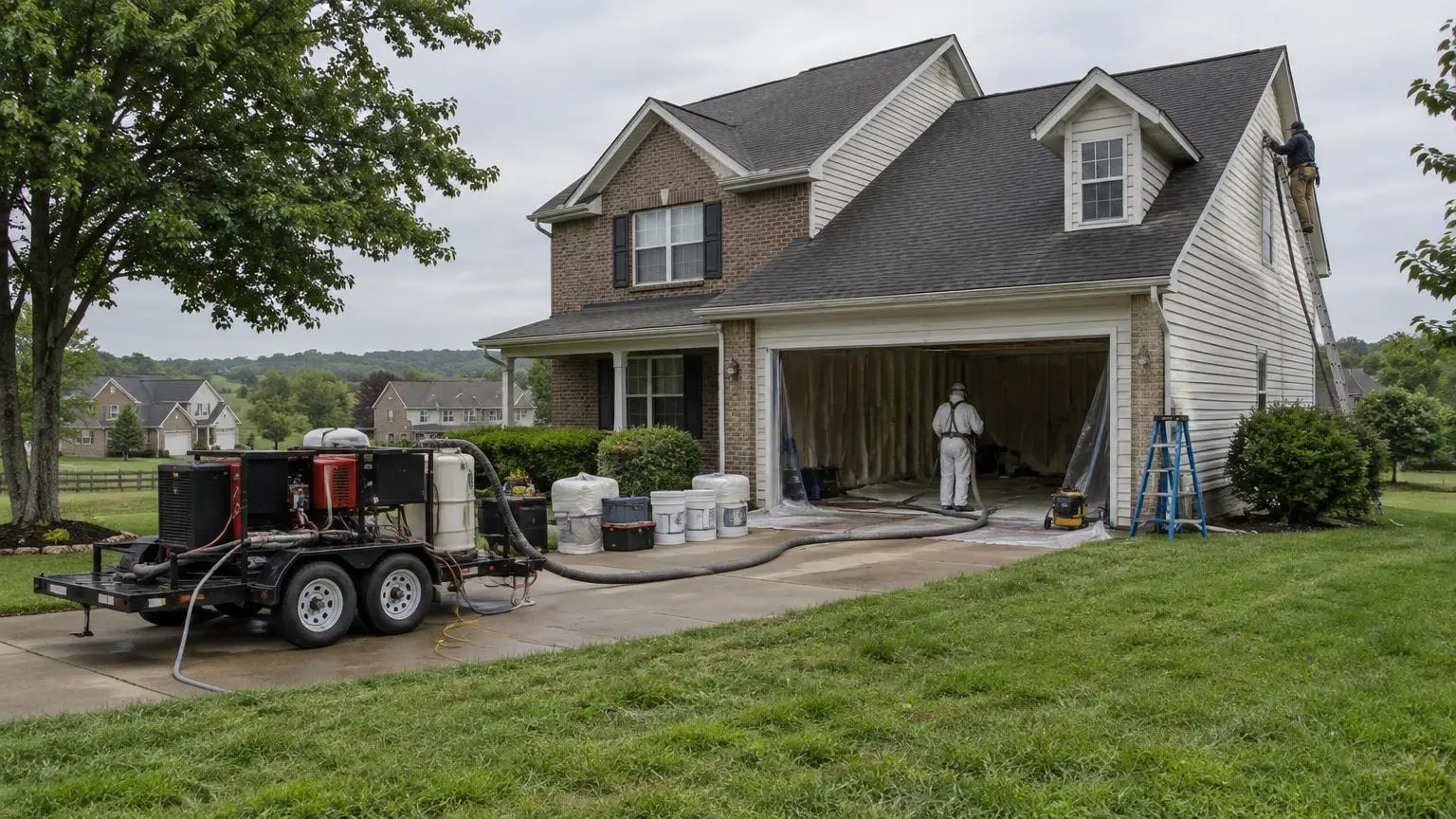
Roof decks, crawl spaces, bonus rooms
Spray Foam Insulation in Murfreesboro, TN
The right foam for each space, with thickness and R-value in writing.
- Free on-site estimates
- Written quote with material, depth and R-value for each area
- Moisture and air leaks checked before anything is covered
Matching Foam to a Hot, Humid Climate
Spray foam insulation is mixed from two liquids at the spray gun and expands as it hits the surface, curing into a layer that both insulates and stops air. In Middle Tennessee, its best uses follow the climate: under roof decks where ductwork lives in the attic, on the walls of crawl spaces that pull in humid air, under bonus room floors that sit over hot garages, and on the steel of shops and barns that drip with condensation.
Open-cell under the roof
Open-cell foam expands a lot and fills the space between rafters, sealing every gap in the roof deck. HomeGuide lists it at R-3.5 to R-3.7 per inch and $1.50 to $3.50 per square foot. Sprayed under the roof, it turns a vented attic that can top 130 degrees into a space close to indoor temperature. If your air handler and ducts are up there, that change can cut summer cooling losses noticeably. It also requires a plan for attic humidity, which we discuss with you and, when needed, your HVAC contractor.
Closed-cell where moisture matters
Closed-cell foam is dense, rated R-5 to R-7 per inch at about $3.00 to $5.00 per square foot (HomeGuide). It does not absorb water and acts as a vapor retarder at normal thickness. We use it on crawl space walls and rim joists, under bonus room floors, in tight cathedral ceilings and on metal building panels.
Where foam is not worth it
On a big, open attic floor with no equipment above it, sealing the leaks and blowing cellulose or fiberglass to depth costs less and works well. We tell you when that is the better plan.
Termites and foam
If your home is under a termite bond, keep in mind that foam on crawl space walls can hide termite tubes from inspectors. Some pest control contracts require an inspection gap at the top of the foundation wall. Tell us if you have a termite bond, and we will plan around its requirements.
Safety and re-entry
Foam in living areas, attics and crawl spaces often needs a thermal or ignition barrier, depending on the space and the product listing. We include that in the plan. During spraying the area is closed off and ventilated; HomeGuide advises staying out for at least 24 hours.
Want foam and blown-in priced side by side? Get a free estimate
What This Covers
The spaces we spray most in Murfreesboro-area homes and buildings.
Roof decks
Open-cell or closed-cell under the roof to bring ducts inside the insulated space.
Crawl space walls
Closed-cell on foundation walls in sealed crawl spaces.
Rim joists
Closed-cell around the perimeter where framing meets foundation.
Bonus room floors and kneewalls
Closed-cell to block garage heat and fumes and fill tight framing.
Open walls
Foam in stud bays during remodels and additions.
Metal buildings
Closed-cell on steel panels to insulate and stop condensation.
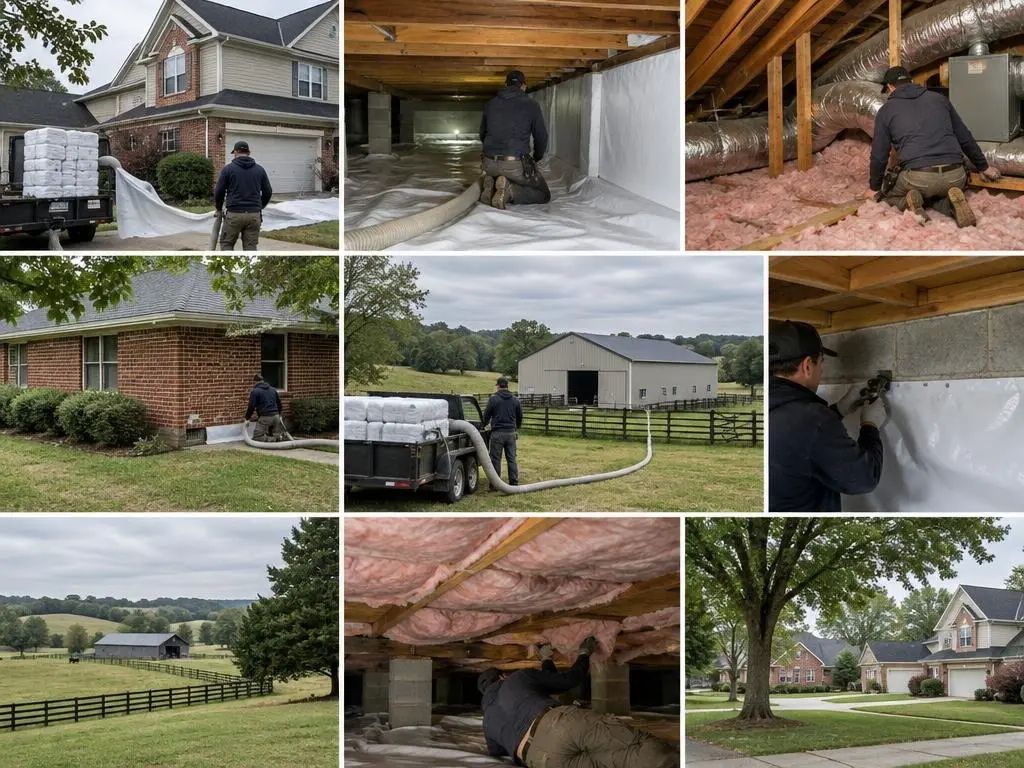
Published Spray Foam Insulation Costs
| Job | Range and source |
|---|---|
| Spray foam, installed | $1.50 to $5.00 per sq ft (HomeGuide) |
| Open-cell / closed-cell | $1.50 to $3.50 / $3.00 to $5.00 per sq ft (HomeGuide) |
| About 1,000 sq ft | $1,500 to $5,000 (HomeGuide); $3,150 to $7,500 existing home (Fixr) |
| Existing walls / new construction | $3.15 to $7.50 / $2.75 to $6.50 per sq ft (Fixr) |
| All exterior walls | $4,000 to $10,000 (HomeGuide) |
| Whole house | $8,000 to $20,000 (HomeGuide); $10,000 to $30,000 (Fixr) |
| Typical job minimum | $1,000 to $2,000+ (HomeGuide) |
National ranges from HomeGuide (2026) and Fixr (2025). Foam type, thickness, access and prep change the total, and small jobs often carry a minimum. The written estimate we give you is what you pay.
How It Works
1. Site visit
We see each space, check moisture, ducts, wiring and old insulation, and measure.
2. Written foam plan
Foam type, thickness, R-value and price for each area.
3. Prep
Covering, masking and ventilation set up.
4. Spray
Foam applied in passes to the stated thickness.
5. Finish
Thickness checked, cleanup, and re-entry time confirmed.

Why Choose Us for Spray Foam Insulation
Climate-matched
Foam choices based on heat and humidity, not habit.
Termite aware
We plan around termite bond requirements.
Thickness on paper
Inches and R-value for every area.
Spray Foam Insulation Questions
Open cell or closed cell for a roof deck?
Both are used. Open-cell is common and costs less per square foot; closed-cell gives more R-value in limited rafter depth. We recommend one based on your roof and attic.
Will foam on the roof deck hurt my shingles?
Concerns about shingle temperature are generally small, but check your shingle warranty terms. We can discuss it on the visit.
Can I spray foam myself?
Small kits work for patch jobs. Large areas need professional equipment for proper mixing and thickness.
Does spray foam help with humidity?
It stops humid outdoor air from leaking in, which helps. Indoor humidity also depends on your HVAC system.
Who manufactures spray foam insulation?
Several national chemical companies make the two-part systems installers use. Our quote names the product and its R-value per inch.
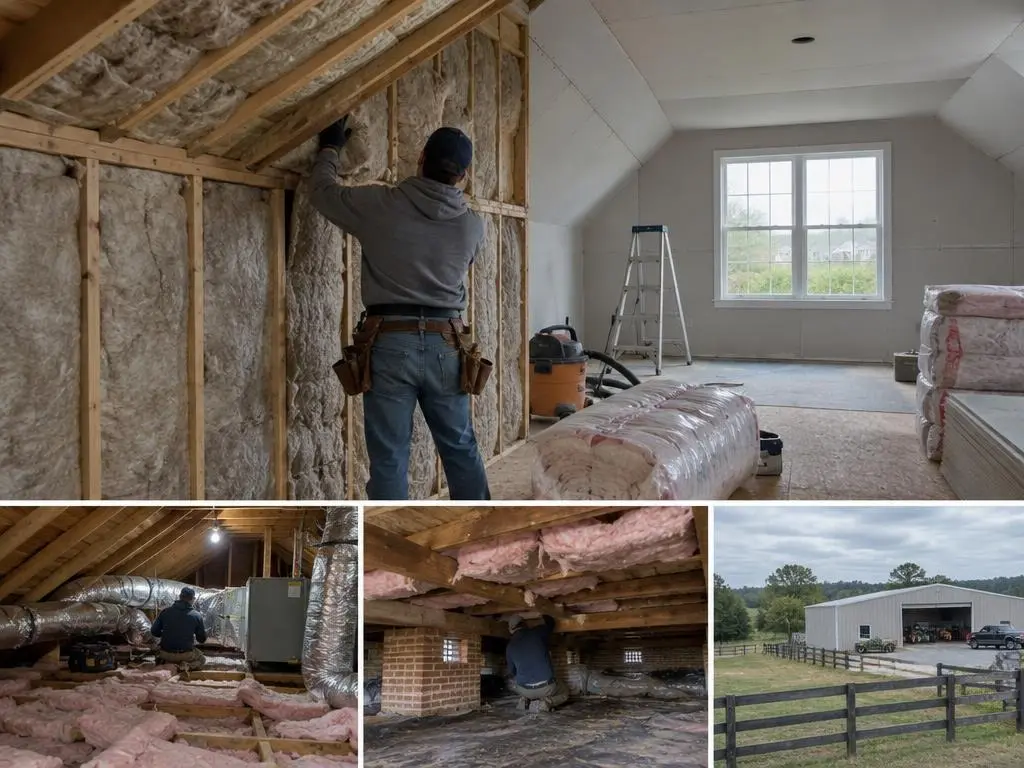
Spray Foam Insulation Service Areas
- Spray Foam Insulation in Murfreesboro, TN
- Spray Foam Insulation in Smyrna, TN
- Spray Foam Insulation in La Vergne, TN
- Spray Foam Insulation in Christiana, TN
- Spray Foam Insulation in Rockvale, TN
- Spray Foam Insulation in Eagleville, TN
- Spray Foam Insulation in Lascassas, TN
- Spray Foam Insulation in Shelbyville, TN
- Spray Foam Insulation in Woodbury, TN
- Spray Foam Insulation in Lebanon, TN
- Spray Foam Insulation in Mount Juliet, TN
- Spray Foam Insulation in Nolensville, TN
- Spray Foam Insulation in Antioch, TN
- Spray Foam Insulation in Franklin, TN
Get a Spray Foam Insulation Estimate
Tell us which spaces you want sprayed. We will look and send a written foam plan.